

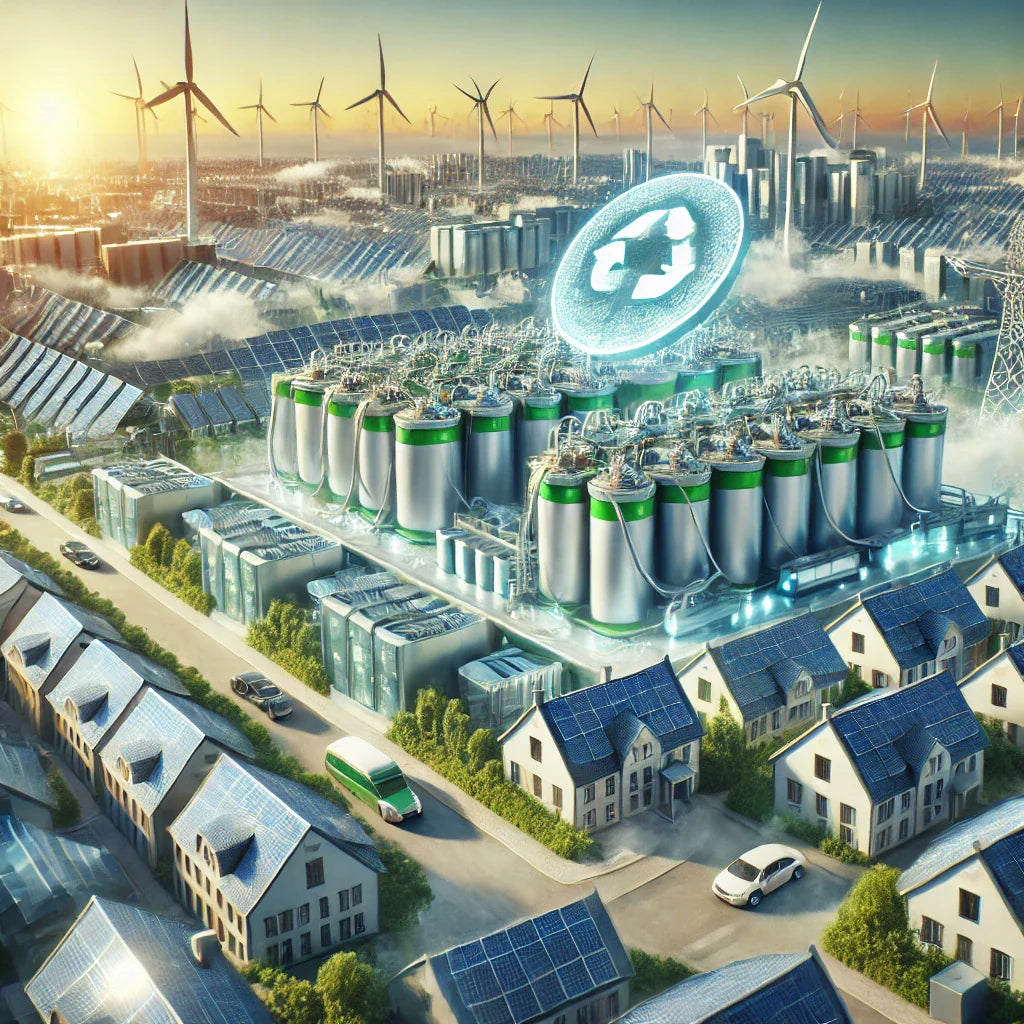
Batterirevolutionen: Danmarks vej mod bæredygtig energilagring
Introduction: Batteries as the Engine of the Green Transition
The global battery market has exploded – according to the EU's latest projections, a 14x growth in demand is expected by 2030. In Denmark, we reached a battery capacity of 621 MWh in 2023, enough to cover the annual consumption of 6,000 Danish households. But how is Denmark positioning itself in the global green energy race?
Battery growth 2020-2030
Market Trends: Focus on the Danish Battery Boom
Key figures from 2023
-
260% growth in newly installed capacity from 2022
-
40,000 battery systems in operation – 98% small home installations
-
46% of total capacity comes from large industrial systems
Price Development & Technology
|
System type |
Price range (DKK/kWh) |
|
Basic home battery |
1,500-3,000 |
|
Smart battery |
3,500-6,000 |
|
Industrial solution |
1,000-2,000 |
Technological Breakthroughs
Lithium-ion Dominance
-
99% of Danish batteries use Li-ion with 20% higher energy density than 2020 models
-
Flow batteries like Vanadium Redox (VRFB) on the way: 20,000+ charging cycle lifespan
Safety & Sustainability
-
The EU's new Battery Regulation (2027) requires 70% recyclability
-
Danish research at DTU is focusing on cobalt-free batteries using silicon anodes216
The Future: Danish Ambitions Towards 2030
Scenarios for Capacity Growth
-
Base scenario: 10 GWh total capacity in 2030
-
Grid support: Batteries are expected to reduce congestion by 60%
Challenges
-
Grid expansion: Must keep pace with private battery growth
-
Raw material security: Only 12% of lithium is currently recycled in the EU812
Infographic: Visualization of Key Data
Battery types in Denmark 2023
Lithium-ion: 99%
Flow batteries: 0.8%
Lead-acid: 0.2%
Source: Danish Energy Agency
Market Distribution
Residential: 72%
Commercial: 23%
Industrial: 5%
EU Influence: Circular Economy at the Center
According to the new Battery Regulation812:
-
Mandatory carbon footprint from 2027
-
Digital battery passport with lifecycle data
-
Recycling requirements: 50% of lithium must be recovered by 2030
Action Plan for Danish Companies
-
Combine solar panels and batteries – increases self-consumption by 30%
-
Prepare for EU compliance with documentation of raw material origins
-
Utilize grant schemes:
-
Green Transition Pool (up to 40% subsidy)
-
Industry Funds for Energy Storage
Conclusion: Batteries Create the Energy System of the Future
Denmark faces a unique opportunity to become a European frontrunner in:
✅ Smart Grid integration
✅ Circular battery production
✅ Fossil-free backup capacity
Is your company ready? Contact us for a free battery consultation.

